Little fact about us this week (I know, what, Gary – you’re ruining the order!):
We’re both firm believers in chosen family, but only one of us has a ranking system. (It’s laminated.)
Our photo:
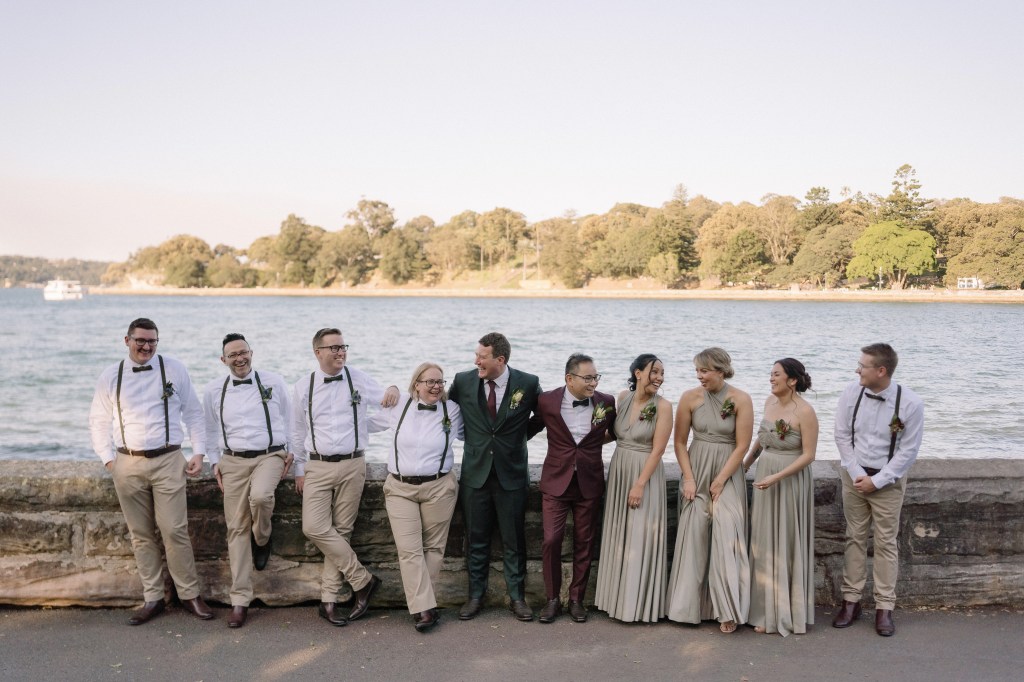
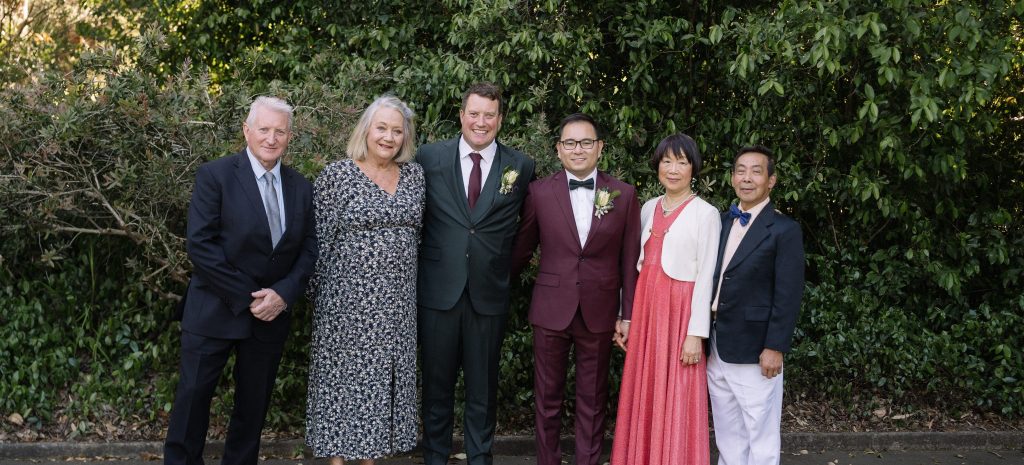
I’ve been asked whether the photos I choose have any meaning. So, introducing this little nugget to the posts. This week’s photo? Some of the people in our village who don’t really get a choice.
Therapy, but it’s intentional
Let’s talk about counselling. Yep. The big, beautiful, occasionally confronting part of becoming intended parents that nobody really brags about on social media.
In Australia, mandatory counselling and psychologist sessions are required and a key step in the surrogacy journey. This is not only for us as intended parents, but also our surrogates either as an individual or as a couple. It’s not just a box to tick – it’s a way of checking in with yourselves, your surrogates, your relationship, and your readiness for what lies ahead.
Our thoughts honestly? We were a bit nervous going in. Who knows what they’re going to ask you. Your entire future and the potential of you becoming parents rests solely on this initial and very confronting formal step.
I don’t need to analogise this, really. Just imagine you’re a couple who can have children together and decide to take that step. But before you take that step you are told you need to go get counselling, then sit with a psychologist, then have a formal permit submitted and approved by an ethics committee. Arguably, some might say that’s a good thing, but in reality, of course not a consideration for most.
But, if this is the path you want to go down whether you be hetero, homo, queer, or single, you better strap in for the ride and prepare yourself for what gets dug up in this process.
So, what actually happens?
For us and our surrogates, there were two steps.
Step 1: Counselling
Counselling starts with the basics. It’s an exploration of the commitment, the cost, the journey, and a shock-strategy that helps us acknowledge what there is involved in the process. It’s an assessment with a qualified surrogacy and fertility counsellor who does the initial safety check and sign off that we understand what it means to go through this process.
The questions? Well it wasn’t a formal sit down interview, but there’s basic questions they cover such as:
- “What have you read?”
- “How informed are you of what you’re about to go through?”
- “Do you know it actually doesn’t work out sometimes?”
- “What support networks do you have in place?”
- “Are you ready for an extended journey?”
- “There are a lot of roadblocks.”
- “Have you got the finances?”
Our experience? It was actually really lovely. I’m sure we were lucky to have really gentle and soft counsellors that asked us what they needed to ask and told us how it is. And that works for Sam and I, because that’s the type of people we are. In saying that, I can see why it might not work out for everyone, especially if you’re the type of person or people that doesn’t like to be told how, when, and what to feel.
Our surrogates’ experience? Well, positive feedback all around here too. Lucky for us they’ve been through this process before so it wasn’t entirely new to them. And believe you me when I say that is a massive step in the right direction and so intangibly valuable to how our experience is going to be in the long run.
So, after we both attended our initial counselling, we move onto the next part.
Step 2: Psychologist
As the name suggests, this step involves sitting down with a psychologist who knows surrogacy and fertility inside and out. Thankfully, our one wasn’t fazed by four gays nervously over-explaining everything. Well….one of us still maintains that they ‘know’ how to talk to psychologists and didn’t say very much, but if so, I’m sure the rest of us made up for that.
Again, both the intended parents and the surrogates have to go through the same process. But, at this stage, there is also the added bonus of having a joint session.
In these sessions, you talk through everything. Your motivations, your coping strategies, all the feelings you keep hidden under humour. You unpack how you’ll support each other, what kind of parents you hope to be, what kind of parents you had, and how you’ll survive the meltdowns (yours/ours – not the baby’s).
Typically, there are no wrong answers, as we’re told. There are just brutally honest ones with a side of self-awareness along with forced perspective. “Forced” because it’s not always a view or a sense of self you really wanted to take on or face reality for.
Ultimately, we learned a lot.
We learned that we communicate very differently, one of us sends bullet points, the other sends memes, but we value the same things.
We learned that one of us chases because we’re scared of separation, and the other leaves because they’re scared of retaliation.
We learned that behind all the jokes about chaos, we’re quietly building something with a ridiculous amount of love and intention.
We also learned that no matter how many spreadsheets or deep chats we have, the idea of someone else carrying our child for us is still deeply surreal… and sacred.
Next stop: the village. Population? Icons only.
One of the biggest takeaways from counselling and psychology? You don’t do this alone.
Surrogacy, like parenting, is a team sport. And we’ve started to realise how lucky we are to already have some pretty bloody amazing humans in our corner – our surrogates, our friends, and our families. This journey is showing us who’s really showing up, and it’s equal parts heartwarming and eye-opening.
We’ve had friends ask the best questions and truly want to understand for us. Family members quietly offering to help in ways that matter. Healthcare professionals and support officers gently nudging us forward. And then the people who just keep showing up with hugs, memes, and promises of future help – all with no expectations, just love, understanding, and empathy.
While it might seem odd to include counselling and psychology in the mix of “village talk,” they’re absolutely central to it. Our counsellors and psychologist didn’t just ask us questions. They helped us understand what support really looks like, where the gaps are, and how to build something more intentional around us. It’s not just therapy, it’s foundational work for the kind of community we want to raise a child in. Turns out, emotional scaffolding is just as vital as the people who bring snacks, food, and wine.
But here’s the thing no one really says out loud: villages can be complicated. Support doesn’t always look the way you expect. Sometimes it’s loud and loving. Sometimes it’s silent but steady. And sometimes, it’s completely absent from the people you thought would be front and centre. And that reality has been…well…a lot.
Still, we’re learning that building our village isn’t about perfection, it’s about intention. It’s about making space for the people who show up, who lean in, and who help us create the kind of world our future child can feel safe, supported, and wildly loved in. One group chat, one boundary, one shared bottle of wine at a time.
And honestly? The excitement and love already pouring out of this village is what keeps us going. It reminds us why we’re doing this. For a child (or children!) who will be so deeply wanted, and so surrounded by love from day one.
So yes, it takes a village, and turns out, it also takes two emotionally available gays, a few therapists, a spreadsheet (or six), and a whole lot of honest conversations. But what we’re building – this weird, wonderful, loving little community around our future child – is already something special. It’s messy. It’s magic. And it’s ours.
And if our village keeps showing up like this? We reckon this kid’s going to have one hell of a welcome party, and eventually when they read this, they’ll know they were so loved and wanted from before they were even an embryo.
Until next week then, signing off therapised, organised, semi-socially exhausted, and awaiting your RSVP to the village.
Love,
Gary and Sam 🏡





 Two dads and a dream
Leave a comment